
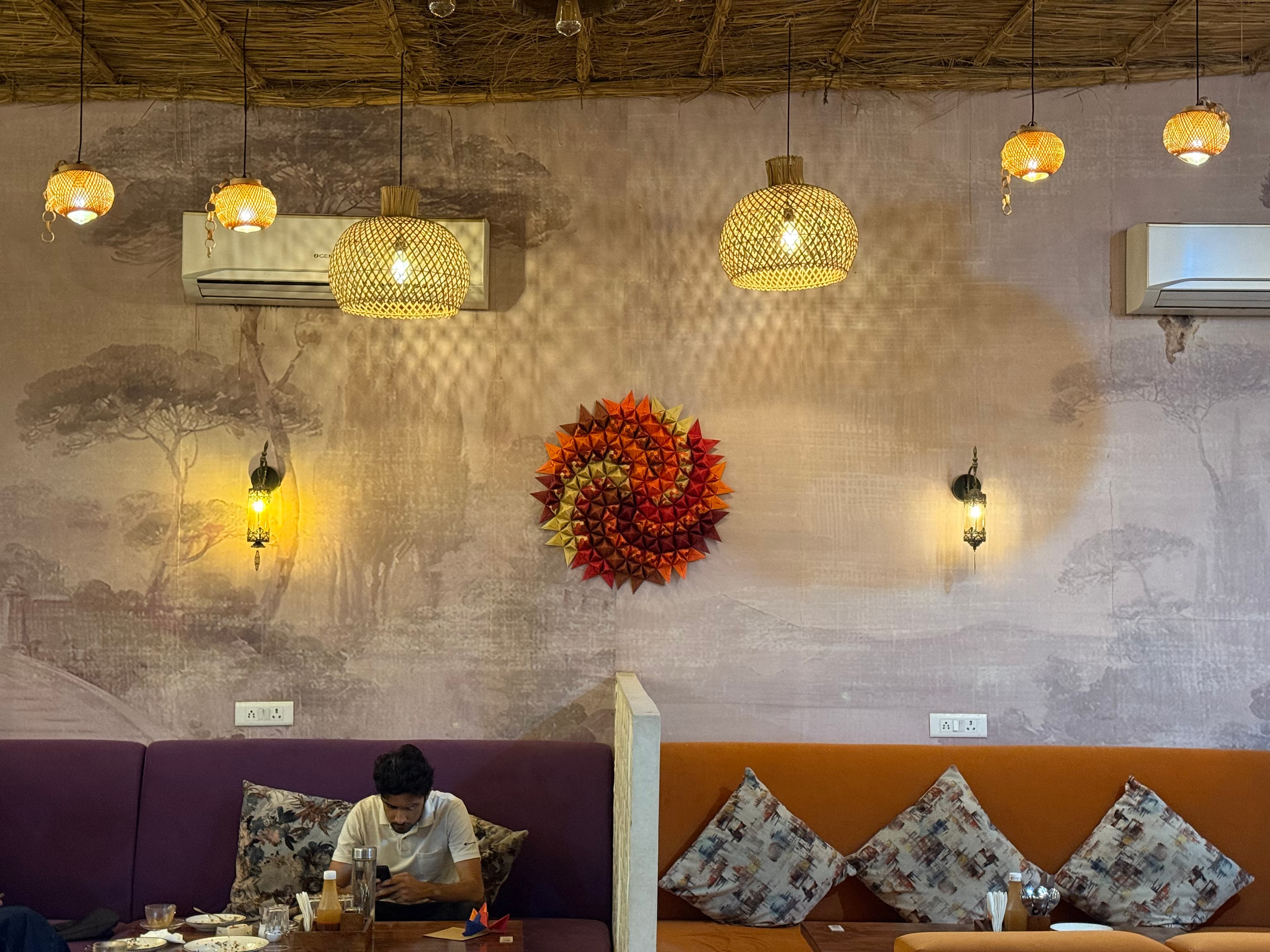
Paper sculpture is moving beyond the world of traditional craft and becoming part of contemporary design, fashion, events, retail and interiors. Its ability to transform from a simple sheet into intricate, large-scale and visually striking forms is changing how we see this familiar material.
For a long time, paper was something we used rather than something we looked at. It carried our drawings, held our notes, wrapped our gifts and filled the pages of books. When it was used creatively, it was often placed under the familiar label of craft. Paper meant origami, paper cutting, school projects, greeting cards and handmade decorations. It was considered approachable, inexpensive and temporary.
That perception is beginning to change.
Walk into a thoughtfully designed space today and paper can be difficult to recognise for what it once was. It may be hanging from a ceiling as a large sculptural form, covering a wall as an intricate installation, sitting on a table as an object of design or even taking the shape of a garment. Artists and designers have been exploring paper for years, but the material is increasingly finding its way into the spaces where we usually expect to see more conventional materials such as fabric, metal, wood, glass and plastic. Paper installations have appeared in galleries, fashion environments and retail spaces, while contemporary designers are pushing paper and paper based materials into furniture, objects and architectural forms.
Perhaps what makes this interesting is not that paper has suddenly become fashionable. It is that we are beginning to see paper differently.
A sheet of paper has almost no presence when it is lying flat. Fold it, cut it, layer it, twist it or build it into something larger and its character changes completely. It can become delicate and intricate, or surprisingly bold and architectural. It can create shadows, texture and movement without requiring the visual weight of traditional materials. That ability to transform is one of the reasons paper works so well in contemporary spaces. It gives designers a material that can be shaped around an idea rather than simply selected for its existing appearance.
This becomes particularly visible in fashion and retail. Paper has always been present behind the scenes in fashion through pattern making and prototyping, but designers and artists are increasingly treating it as the finished material itself. The India Paper Triennial, for example, has created a dedicated platform for artists and fashion designers to explore garments, accessories, jewellery, headpieces and other wearable creations made from paper. Earlier collaborations have also placed paper garments and sculptures directly within fashion and retail environments, showing how easily the material can move between craft, sculpture and design.
The appeal is easy to understand. Paper can make something familiar feel unexpected.
A dress made from fabric is immediately understood as clothing. A dress constructed from hundreds of carefully folded or cut pieces of paper becomes something else at the same time. It is clothing, sculpture and visual storytelling. The same happens with a paper flower suspended over a dining table, a giant paper character standing inside a retail store or an entire wall transformed into a layered paper landscape. The object is no longer simply serving a function. It is creating a moment.
And moments have become increasingly important in the spaces around us.
Restaurants, cafés, stores, exhibitions, weddings and events are no longer designed only to look good from a distance. They are designed to be experienced and remembered. A distinctive installation can become part of the identity of a place. It can give visitors something to photograph, something to talk about and something that makes the environment feel different from the one next door. Paper is particularly suited to this because it can be produced in almost any visual language. It can be minimal, playful, elegant, traditional, surreal, geometric or incredibly detailed.
Fashion understands this instinctively. So does retail. A brand can use an installation to communicate an idea without putting that idea into a paragraph of text. A paper forest can make a store feel immersive. A collection of folded forms can make a fashion display feel sculptural. A large handmade object can make a temporary event feel considered and distinctive. Paper becomes part of the visual language of the space.
There is also something emotionally appealing about seeing something handmade in a world increasingly filled with things produced digitally. We are surrounded by perfect images, computer generated environments and endlessly repeatable designs. A handmade paper sculpture carries evidence of the person who made it. The slight variation between folds, the texture of the sheet, the precision of a cut and even the imperfections can become part of the object.
That physical quality matters.
You can see the same shift happening in other traditional materials. Papier-mâché, for example, has been moving beyond its familiar association with decorative craft and into contemporary furniture, lighting, sculpture and installations. Designers are finding new ways to make humble materials feel sophisticated without removing the qualities that made them interesting in the first place.
Paper is experiencing a similar transformation.
What is particularly exciting is the scale at which it can now be used. Paper does not have to remain something held between two hands. With enough planning, repetition and craftsmanship, small pieces can become enormous environments. A collection of individual forms can become a ceiling installation. Hundreds of folded elements can become a wall. A carefully engineered structure can occupy an entire room.
Recent design work has pushed this idea even further. In 2026, Issey Miyake and Ensamble Studio explored discarded paper from the garment pleating process as a material for furniture and sculptural forms, demonstrating how paper can move from an industrial byproduct into something with a completely different physical and aesthetic identity.
That is perhaps where the real change is happening. Paper is no longer being valued only because it is easy to work with. It is being valued because of what it can become.
Of course, paper is not automatically sustainable simply because it is paper. Its environmental value depends on how it is sourced, produced, used and disposed of. But the material does offer designers an interesting alternative to more permanent or resource intensive materials in certain temporary installations and creative applications. More importantly, it invites a different way of thinking about materials. Something ordinary does not necessarily have to remain ordinary.
And perhaps that is why paper sculpture feels so relevant right now.
We have become accustomed to seeing creativity through screens. We scroll past thousands of images every day, often forgetting most of them within minutes. A physical paper sculpture asks for a different kind of attention. You can walk around it. You can see how light falls across its surface. You can notice the folds and construction. You can understand its scale. You can photograph it, but the photograph is still only a record of something that existed physically in front of you.
That physical presence is what makes paper sculpture more than a decorative trend.
It is becoming a language for spaces, brands, designers, artists and experiences. It sits comfortably between craft and contemporary design, between sculpture and installation, between fashion and visual storytelling. It can be intimate enough for a tabletop and ambitious enough for an entire room.
For generations, paper was where we drew things.
Now, paper can be the thing itself.
It can become the artwork, the sculpture, the installation, the costume, the environment and sometimes even the experience.
The material has not changed very much.
Our imagination of what it can do has.
Written by Anuj Tomar