Unfolding
 Kirigami Arts
Menu
Folded, cut, and built in Jaipur.
Kirigami Arts — India
Kirigami ArtsFolded, cut, and built in Jaipur.
Kirigami Arts — India
Unfolding
Kirigami ArtsFolded, cut, and built in Jaipur.
Kirigami Arts — India
Unfolding
About Kirigami Arts
A fascination with folding slowly turned into something much bigger. What began as a love for origami became a studio, a team, a lot of experiments, and eventually a way of making almost anything we could imagine out of paper.
Who we are
Kirigami Arts brings together artists, makers, designers, and curious minds from different creative backgrounds. Everyone brings something different to the table, and that mix is what allows an idea to move in unexpected directions.
From teaching a first fold to developing a new product, building a sculpture, or creating something large enough to fill a room, the work takes many forms. What connects it all is the people behind it, the love for making, and the curiosity to see how far a simple sheet of paper can go.
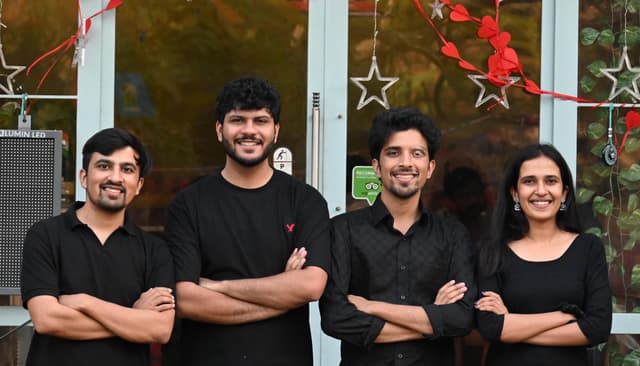
the whole crew ♡
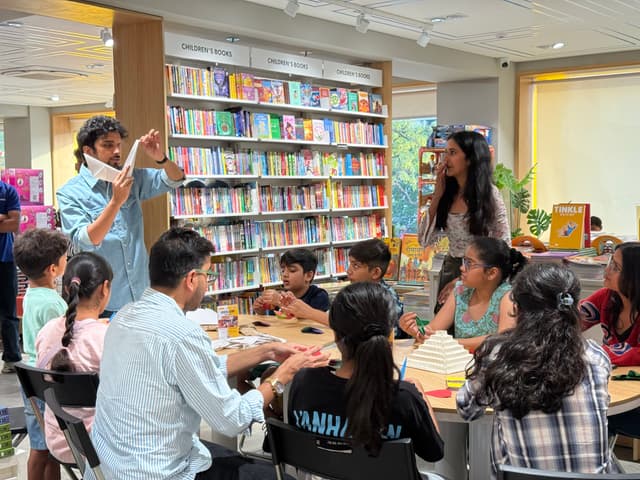
workshop days
Our principles
We are built around the belief that good things happen when different people bring their skills, experiences, and ways of thinking to the same table. Artists, makers, designers, educators, and curious minds come together as one creative force, with every perspective adding something to the work.
Creativity sits at the heart of everything we make and everything we explore. We believe in staying curious, trying things differently, and giving ideas the freedom to evolve, whether that leads to a simple fold, a new product, an engaging workshop, or something far more ambitious.
We believe creativity grows when people are given the time, space, and encouragement to explore it. Through workshops, learning experiences, and the things we create, we hope to help people discover new interests, develop their skills, and keep making long after the first fold.
Paper may be one of the oldest materials around, but there is always something new to discover in it. We keep experimenting with forms, techniques, materials, and applications to find new ways of working with paper and turn familiar ideas into something unexpected.
The act of making should be as enjoyable as what comes out of it. From the satisfaction of getting a difficult fold right to watching an idea slowly take shape, we believe there is something genuinely joyful about making things with your own hands, and that feeling should remain part of the experience.
Care is something we believe should be visible in the final result, but it begins much earlier than that. From choosing the right material and developing an idea to refining the smallest detail and finishing the final piece, we put thought into every part of the process because the little things are what make the whole thing work.
Our journey
Two brothers, a lot of curiosity, and a simple frustration with how far the art books seemed to go. Airplanes, boats, butterflies, a few paper toys, and then nothing. We wanted to know what came after that. Finding the answer took years, a lot of trial and error, and eventually became the beginning
Around the age of eight and ten, origami was mostly something we found in school art books and the occasional paper toy tucked into a snack packet. They showed us how to make a boat, an airplane, or a butterfly, but rarely what came after. When nobody around us knew the answer to that question, we started looking for it ourselves.
Teachers, parents, grandparents, friends, strangers, old books, and eventually the internet all became part of the search. This was the days of 2G internet and limited data, so finding an origami tutorial was an achievement in itself. Anuj would leave our father's phone on the highest place on the roof overnight just to download a single YouTube video. Good origami books were either difficult to find or far too expensive, so progress came slowly, one discovery at a time.
Anuj kept going even when there was very little new information to find. Models that might take a beginner a few weeks to learn took years to properly understand. Slowly, the folds became familiar, the diagrams started making sense, and the collection of models grew. More than 150 models eventually became part of his repertoire, and a small group of classmates began folding together. Origami was no longer just something we were learning. It had become something we wanted to share.
Origami had its limits, and papercraft offered an entirely different set of possibilities. Better internet access helped us discover techniques that were almost impossible to find before, and we began experimenting with cutting, shaping, assembling, and building with paper. At the same time, Vivek was exploring sketching and other forms of visual art. Both of us were slowly finding our own ways of working with creativity.
The question eventually changed from “what comes next?” to “why not?” With a few friends, we decided to put together a two-day workshop and exhibition covering origami, papercraft, chess, and Rubik's cubes. We rented a dance studio in our hometown, somehow managed to get an advertisement into the local newspaper, and welcomed people into our first ever public workshop. Anuj was still in class 10. Looking back, that little event was the closest thing to a beginning that Kirigami Arts had.
Both of us chose engineering and spent the next few years doing what we thought we were supposed to do. Academics, coding, hackathons, freelancing, and everything that came with college slowly pushed our childhood hobbies into the background. Paper and origami became things we remembered rather than things we practised.
COVID gave us something we had not had in years: time. After the initial games, movies, and usual distractions, we found ourselves going back to the things we had left behind. Origami, papercraft, sketching, and digital art returned almost naturally. The interest had never really disappeared. It had simply been waiting for some room.
Back in college, the two of us ended up in the same place again. The technical side of our education had taught us how to solve problems, work under pressure, build things quickly, and figure things out with whatever was available. But being around each other brought another idea back: why not teach the things we had spent years learning? We started organising workshops in origami, calligraphy, chess, and other creative activities around college.
After years of studying, experimenting, working, and organising workshops, one thing became increasingly difficult to ignore. We did not want to leave this behind again. Choosing the less conventional path was not an easy decision, but the support from our parents, grandparents, and family gave us the confidence to take it seriously. By then, we had already organised more than 15 workshops and exhibitions. The idea of building something around all of this no longer felt impossible.
Years of folding, making, teaching, experimenting, failing, and trying again had given us something more valuable than a collection of skills. They gave us the conviction that paper could become much more than a hobby. So we decided to build Kirigami Arts around it, professionally and on our own terms. There were no established rules for what this could become, and not much of a roadmap to follow. That was part of the excitement. We simply knew that we wanted to keep making, keep learning, and give other people the chance to discover what we had found in a simple sheet of paper.
Meet our team
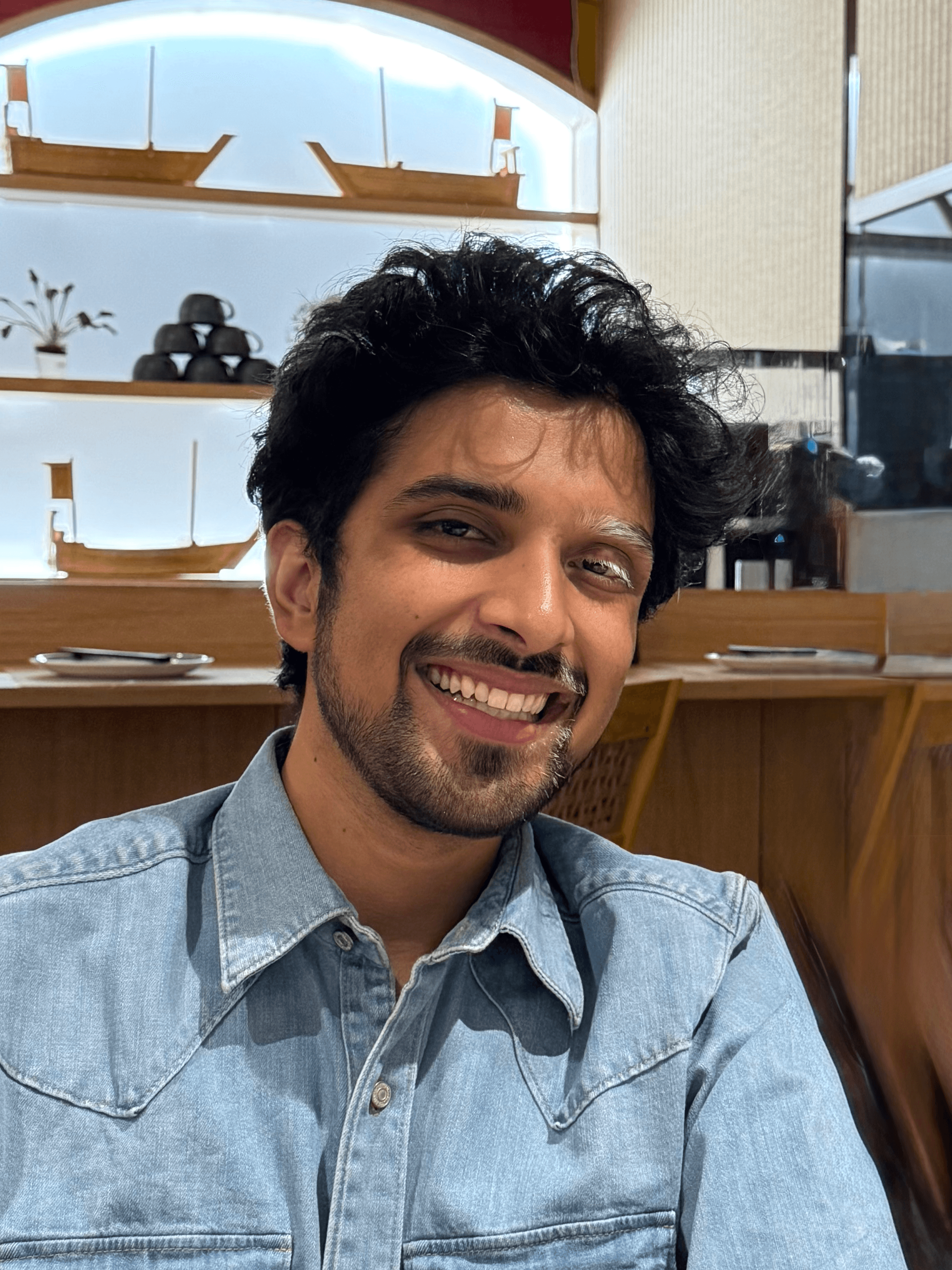
Origami Artist
Anuj Tomar
Co-Founder
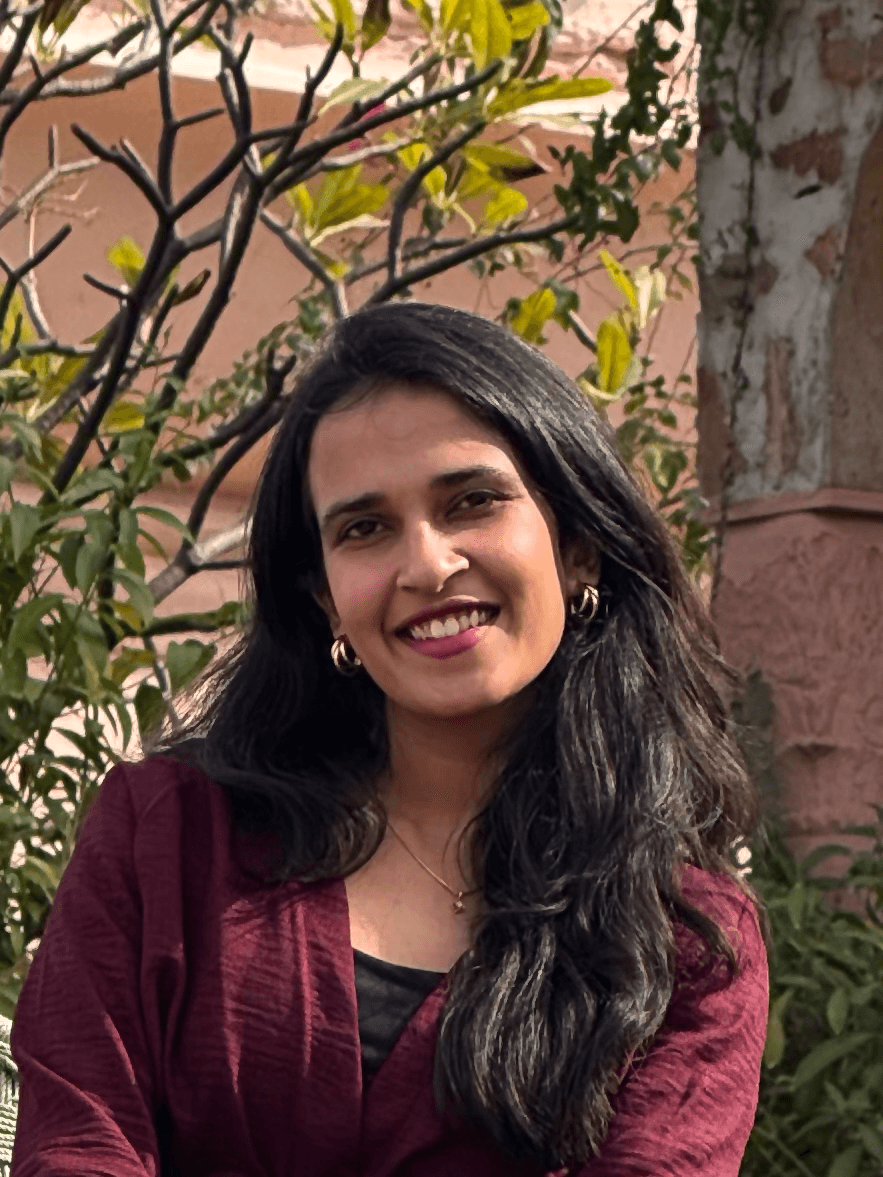
Powerhouse
Nandini Tomar
Creative head

Mastermind
Karrann Goyal
CEO
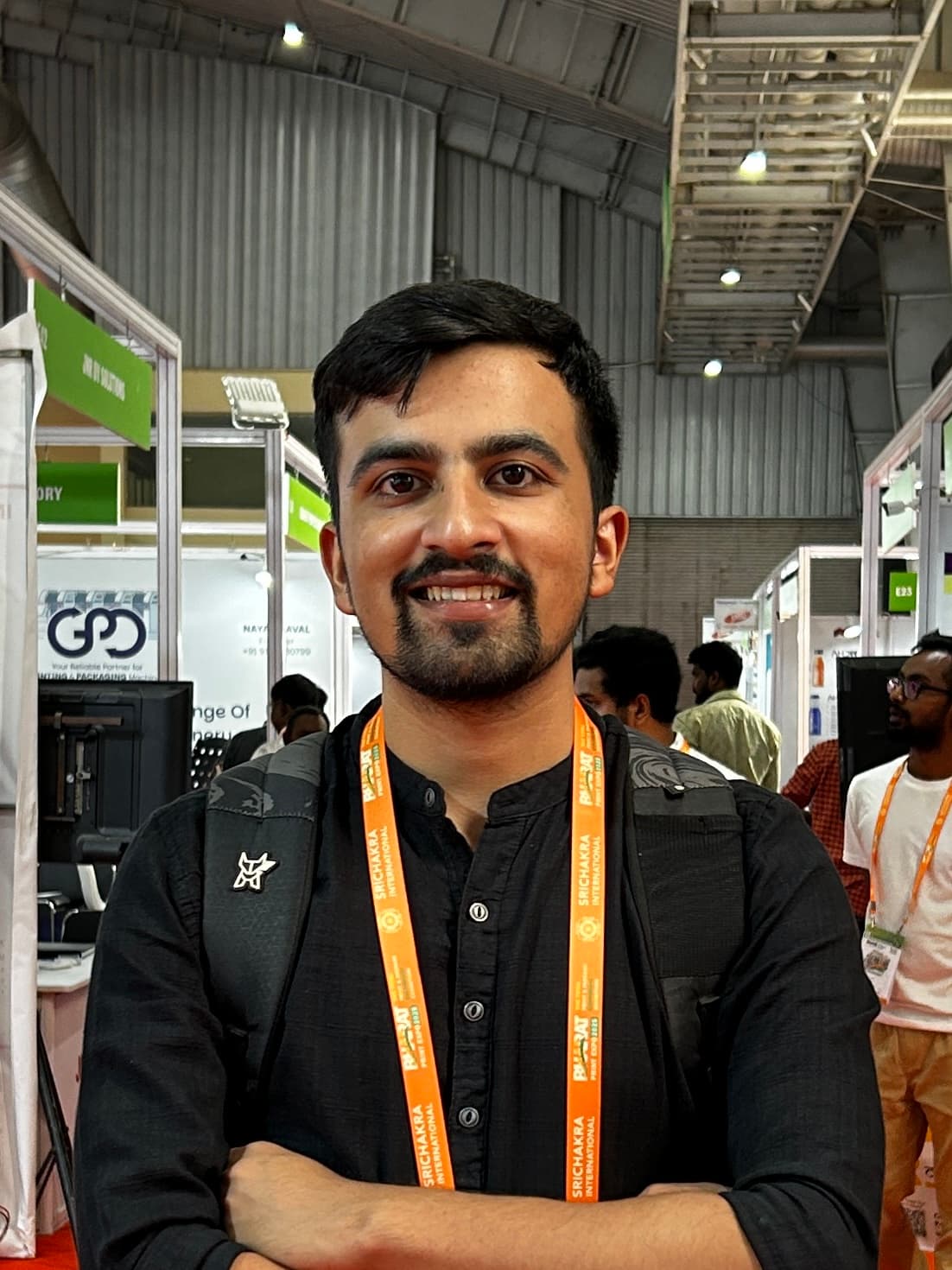
Leader
Vivek Tomar
Co-Founder
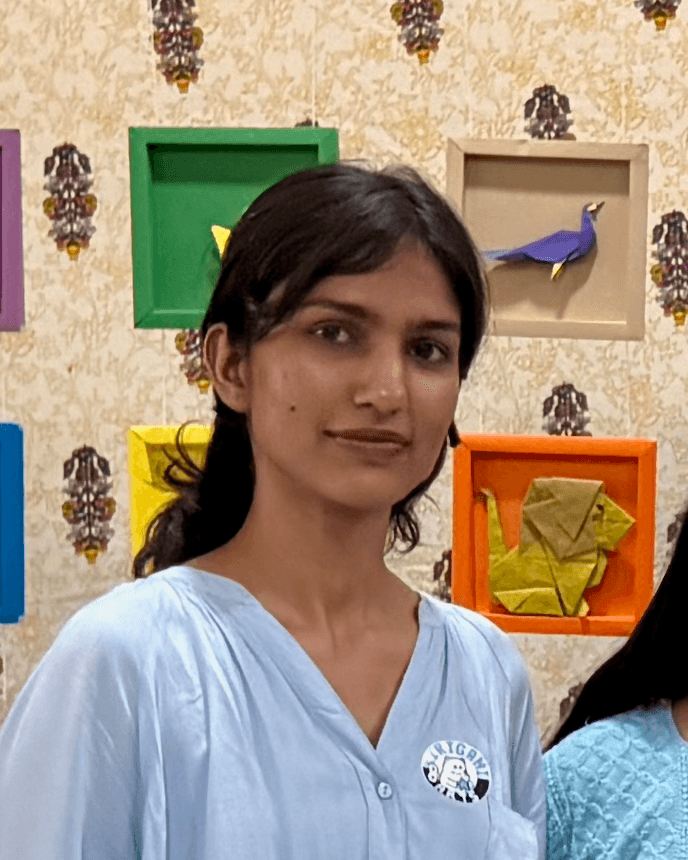
The Artist
Mrinal Jangid
Creative Lead
The next chapter of this story gets folded with you — at a workshop table, or right at home with one of our kits.